How to Choose Sleep Headphones That Stay Comfortable Until Morning
The real test of sleeping headphones is not how they feel at 11 PM when you put them on — it is whether they are still comfortable at 6 AM after 7 hours of unconscious pressure, position changes, and heat buildup. Most sleep headphones pass the “put them on” test beautifully but fail the “wake up with them still comfortable” test miserably. The difference between a product you use once and one you use every night for years is not sound quality or Bluetooth range — it is sustained overnight comfort that your sleeping body never notices because there is nothing wrong to wake you up. Headphones for sleep and relaxation that achieve this invisible comfort share specific construction choices that address the unique physics of 8 hours of unconscious wear in ways that daytime headphone design never considers.
What Causes Sleep Headphones to Become Uncomfortable Overnight?
Four mechanisms cause overnight discomfort that is absent during initial wear: progressive heat accumulation (body heat trapped against skin for hours), pressure point development (sustained force in one position causes tissue compression), material stiffening (some foams and fabrics become less compliant at body temperature), and moisture buildup (perspiration soaking into non-breathable materials creating sticky discomfort).
- Heat accumulation: Your ears generate heat continuously. Non-breathable materials trap this heat, raising local skin temperature by 3–5°F over 3–4 hours. This triggers sweating, which creates moisture discomfort that either wakes you or causes unconscious removal.
- Pressure point progression: Initial pressure from a sleep headphone may feel negligible — 5 minutes of 0.5 PSI on ear cartilage is fine. But 4 hours of that same 0.5 PSI creates tissue compression, restricted blood flow, and pain that gradually intensifies until your sleeping brain finally registers it and wakes you to adjust.
- Material behavior over time: Some memory foams soften excessively at body temperature, losing support and allowing speakers to settle against ear cartilage. Other materials stiffen with heat, creating rigid pressure points that were not present at room temperature during initial fitting.
- Moisture degradation: After 4–6 hours, perspiration accumulates on non-breathable surfaces. The material becomes tacky, pulling on skin during position changes rather than sliding smoothly. This creates micro-awakenings that fragment sleep quality even without full consciousness.
Which Materials Stay Comfortable for 8 Hours Straight?
Breathable mesh fabrics, moisture-wicking athletic textiles, and thin medical-grade silicone maintain comfort for 8+ hours because they allow heat dissipation and prevent moisture accumulation — while memory foam, synthetic leather, and standard cotton trap heat and moisture that progressively degrade comfort throughout the night.
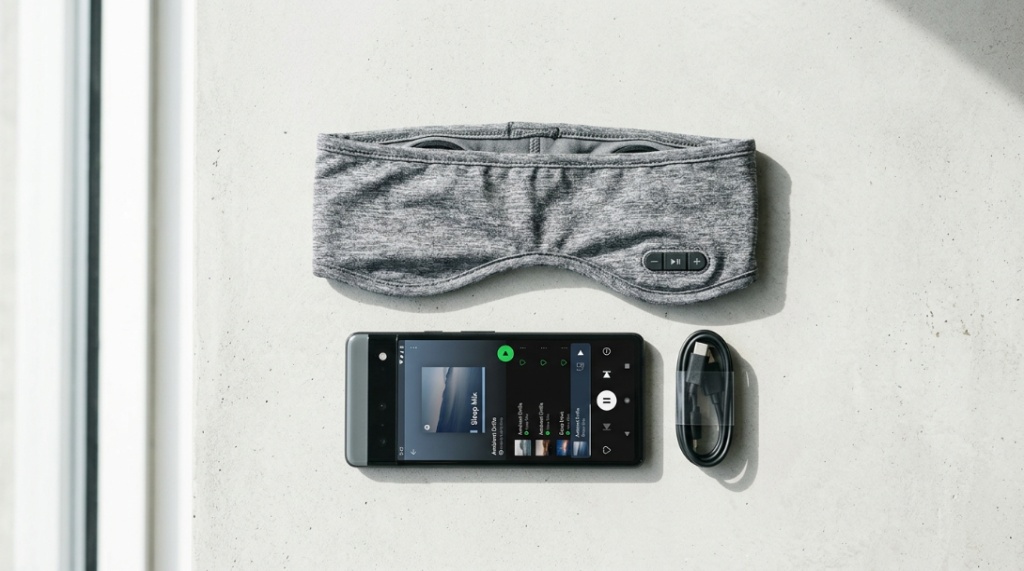
- Best: Moisture-wicking athletic mesh. Actively pulls moisture away from skin, allows air circulation, dries quickly. Used in premium headband-style sleep headphones. Maintains the same comfort level at hour 8 as hour 1.
- Good: Thin bamboo-viscose fabric. Naturally breathable, antimicrobial, soft against skin. Regulates temperature through micro-porous fiber structure. Stays cool and dry longer than cotton equivalents.
- Acceptable: High-quality cotton blend. Breathable and natural but absorbs moisture without wicking it away. Comfortable for 4–6 hours before moisture buildup begins affecting comfort. Requires more frequent washing.
- Avoid: Memory foam padding. Traps heat, absorbs moisture, and changes density at body temperature. Comfortable initially but progressively worse over hours. Common in budget products that feel good in-store but fail overnight.
- Avoid: Synthetic leather/pleather. Zero breathability. Creates immediate heat and moisture trap. No sleep headphone using synthetic leather contact surfaces provides genuine overnight comfort regardless of other design qualities.
How Does Speaker Design Affect All-Night Comfort?
Speakers under 4mm thick with flexible housings and rounded edges maintain comfort all night because they cannot create the concentrated pressure points that rigid, thick speakers produce during hours of pillow contact — the thinner and more flexible the speaker assembly, the less your sleeping body perceives it.
- Under 3mm (ideal): Essentially imperceptible during side sleeping. The speaker flexes with ear/pillow pressure rather than resisting it. No pressure points possible at this thickness. Premium sleep headphones achieve this.
- 3–5mm (good): Noticeable during initial positioning but disappears as sleep onset occurs. Acceptable for most side sleepers on medium-firm pillows. May create mild awareness on very firm pillows.
- 5–8mm (marginal): Creates definite pressure awareness for side sleepers. May remain comfortable for 3–4 hours before discomfort develops. Acceptable for back sleepers only or side sleepers on very soft pillows that absorb the speaker profile.
- Over 8mm (uncomfortable for side sleeping): Standard headphone driver thickness. Creates immediate and progressive discomfort when pressed between ear and pillow. Not designed for sleep use regardless of marketing claims.
What Retention System Stays Secure Without Creating Pressure?
Adjustable-tension fabric headbands that wrap the full circumference of the head provide the best retention-to-comfort ratio for all-night wear — they distribute holding force across the entire head surface (minimal pressure per square inch) while surviving 10–20 unconscious position changes without displacing or tightening uncomfortably.
- Full-wrap headband (best): Distributes retention force across the entire circumference. No single pressure point. Adjustable width and tension accommodate different head sizes. Stays positioned through all sleep positions including face-down.
- Half-wrap or eye-mask style (good): Covers ears and eyes. Slightly more concentrated pressure at the rear strap connection point. Works well for back and side sleepers. May shift during stomach-sleeping moments.
- Ear-hook retention (poor for sleep): Concentrates all holding force on the ear pinna (outer ear). Creates progressive discomfort as cartilage compresses over hours. Falls off during position changes when ear orientation shifts.
- Friction-only fit (poor): Earbuds that rely purely on ear canal friction. Fall out during any position change. Require conscious reinsertion — which means waking up. Not compatible with the unconscious nature of sleep.
How Do You Verify All-Night Comfort Before Committing to Purchase?
Verify overnight comfort through a structured 3-night trial: Night 1 assesses initial comfort and position retention, Night 2 evaluates heat/moisture buildup at your normal sleep temperature, Night 3 confirms that no progressive discomfort develops that worsened from Night 1 to Night 3 — any degradation across nights indicates a product that fails long-term.
- Night 1 checklist: Did you fall asleep without awareness of the headphones? Were they still positioned correctly at wake-up? Any ear pain or red marks in the morning? Audio still playing?
- Night 2 checklist: Same checks plus: did your ears feel hot during the night? Was the headband/contact surface damp in the morning? Did comfort feel worse than Night 1 at any point?
- Night 3 checklist: Compare overall comfort perception to Night 1. If Night 3 feels less comfortable than Night 1, the product is degrading with use (materials compressing, heat building cumulatively). If equal or better, the product maintains comfort long-term.
Only products that maintain consistent comfort across all three nights will remain comfortable for months of nightly use. Progressive degradation across the 3-night trial predicts accelerating discomfort over weeks.
For sleep headphones tested specifically through multi-night comfort evaluations, budget sleeping headphones reviewed for all-night comfort provides sustained-use comfort data rather than first-impression reviews — identifying products that pass the 3-night test versus those that fail by night two.
Conclusion
Sleep headphones that stay comfortable until morning share specific design requirements: breathable moisture-wicking fabrics (not foam or synthetic leather), speakers under 5mm thick with flexible housings, full-wrap headband retention that distributes force across the entire head, and materials that maintain their properties at body temperature over 8 continuous hours. The difference between “comfortable when you put them on” and “comfortable when you wake up” is entirely about sustained performance under overnight conditions that initial fitting cannot reveal.
Use the 3-night trial to verify any purchase before committing long-term. Night 1 comfort means nothing if Night 3 reveals progressive heat, pressure, or moisture issues. Choose products designed specifically for sleep rather than adapting daytime headphones to overnight use — the physics of 8-hour unconscious wear demand purpose-built solutions that generic headphone design never addresses.
How many nights did it take you to find sleep headphones that stayed comfortable all night — and what feature made the final difference? Share below.
Frequently Asked Questions
Why do my sleep headphones feel fine at bedtime but hurt by morning?
Progressive pressure point development. The same low pressure that feels negligible for 5 minutes creates tissue compression and restricted blood flow over 4–6 hours. Additionally, heat buildup changes material properties (foams soften and collapse, bringing hard drivers closer to ear cartilage). The solution: thinner speakers and breathable materials that prevent both mechanisms.
Do expensive sleep headphones guarantee comfort?
No — comfort depends on design choices, not price. Some $80 products use thick drivers and non-breathable materials that cause the same overnight problems as $15 products. Evaluate speaker thickness, contact material breathability, and retention method regardless of price. The most comfortable options typically live in the $30–$50 range for headband styles.
Can I wash sleep headphones to maintain comfort?
Headband-style: yes — remove speakers, machine-wash the fabric band weekly. This maintains breathability and hygiene that degrade comfort when oil/sweat accumulates. Earbud styles: wipe with alcohol pad, replace silicone tips monthly. Regular cleaning extends both comfort and product lifespan significantly.
Are sleep headphones comfortable for people with large ears?
Headband styles accommodate all ear sizes because speakers sit flat against ears without entering the canal or gripping the pinna. Large-eared sleepers often find headbands more comfortable than earbuds that require squeezing into ear canals. Adjust the headband speaker position to center over the ear opening for best sound delivery regardless of ear size.
Will sleep headphones leave marks on my face or ears?
Properly fitted sleep headphones should not leave visible marks. Red marks indicate excessive pressure — either the band is too tight, speakers are too thick, or the material is too rigid. Loosen tension, reposition speakers, or switch to a thinner-profile option. Morning marks mean the product is compromising circulation and comfort even if you did not consciously notice during sleep.
How do I prevent sleep headphones from sliding off during the night?
Choose headband styles with adjustable tension — set snug enough to resist movement but loose enough to avoid pressure. Wider headbands (2+ inches) resist sliding better than narrow ones. Some products include non-slip silicone strips on the interior that grip hair without pulling. If a product slides consistently despite adjustment, it is the wrong size or style for your head shape. Finding the perfect pair of night-time headphones means balancing thickness, materials, and battery life. If you find yourself gravitating toward premium audio brands during your search, you might wonder if the high price tag translates to better overnight comfort. For instance, understanding Why BOSE Headphones are So Expensive – A Detailed Study can give you valuable insight into whether investing in proprietary ergonomics and acoustic engineering is truly worth it for your sleep quality.