How to Choose Premium Bluetooth Headphones for Daily Use
You already know you want premium Bluetooth headphones — but “premium” means something completely different for a gym commuter than it does for someone sitting at a desk eight hours a day. Premium Bluetooth headphones designed for daily use must balance comfort, battery longevity, sound quality, and noise cancellation in ways that occasional-use headphones simply don’t need to address. The headphones you wear 4–8 hours daily face demands that expose weaknesses invisible during a 30-minute store demo or a single weekend listening session.
Premium Bluetooth headphones are wireless over-ear or on-ear headphones in the $250–$450 price range that combine high-fidelity audio reproduction, active noise cancellation, extended battery life (20+ hours), premium build materials, and advanced connectivity features like multipoint pairing and high-resolution Bluetooth codecs.
This guide focuses specifically on daily driver criteria—the factors that determine whether expensive headphones remain comfortable and functional after month three, not just day one. Bose QuietComfort sits at the center of this conversation for good reason, but the right choice depends entirely on your daily environment.
What Makes a Bluetooth Headphone Truly “Premium” for Daily Wear?
True premium daily-wear headphones combine three elements: comfort that doesn’t degrade over 4+ hour sessions, ANC that adapts to changing environments throughout your day, and battery life that handles a full day without anxiety about charging.
The premium label gets applied loosely in marketing. Here’s what actually separates daily-grade premium from “premium in a box but mediocre in practice”:
- Weight under 260g — Anything heavier causes cumulative neck strain during multi-hour daily sessions
- Clamping force calibration — Too tight creates headaches, too loose loses seal and ANC effectiveness. Premium brands calibrate this precisely.
- Memory foam ear cushions with protein leather or mesh — Standard foam compresses and overheats. Premium materials maintain shape and breathability over months.
- Adaptive ANC — Automatically adjusts cancellation strength based on ambient noise level changes. Critical for moving between environments throughout the day.
- Multipoint Bluetooth — Connects to two devices simultaneously, switching between laptop and phone without manual re-pairing.
Budget headphones can hit one or two of these. Premium headphones nail all five without compromise.
Which Premium Bluetooth Headphones Work Best for All-Day Office Use?
For all-day office use, the Bose QuietComfort Ultra and Sony WH-1000XM5 lead the field. Bose offers lighter clamping force for glasses wearers, while Sony provides superior microphone quality for frequent video calls.
Office-specific requirements that most reviews overlook:
- Transparency mode quality — How natural do colleagues sound when you need to hear them without removing headphones? Bose’s Aware mode sounds more natural than most competitors.
- Microphone clarity — Daily video calls demand clean voice capture. Sony’s four-mic array with AI processing currently leads this category.
- Quick attention features — Covering the ear cup to instantly activate transparency mode (Sony) or conversation detection (Bose) prevents the constant headphone-on, headphone-off cycle.
- Low-latency connection — For video calls without lip-sync delays, prioritize headphones supporting Bluetooth LE Audio or aptX Low Latency.
The Bose QuietComfort series remains the preferred choice for professionals who prioritize comfort during 6+ hour workdays — especially those wearing glasses or experiencing pressure sensitivity around the temples.
How Important Is Battery Life for Daily-Use Headphones?
Extremely important. Premium Bluetooth headphones used daily need minimum 24 hours of ANC-on battery to handle a full workday plus commute without charging anxiety. Quick-charge capability is equally critical for the mornings you forget to charge overnight.
Daily battery math:
- Morning commute: 30–60 minutes
- Office/work use: 6–8 hours
- Evening commute: 30–60 minutes
- Evening listening: 1–2 hours
- Total daily drain: 9–12 hours
With 24-hour battery life, you charge every other day. With 30-hour battery, you can forget about charging for nearly three days of heavy use. This eliminates the “dead headphones mid-meeting” problem entirely.
Battery comparison for daily use:
| Headphone | Battery (ANC On) | Quick Charge | Days Between Charges (Heavy Use) |
|---|---|---|---|
| Sony WH-1000XM5 | 30 hours | 3 hrs from 3 min | 2.5–3 days |
| Bose QuietComfort Ultra | 24 hours | 2.5 hrs from 15 min | 2–2.5 days |
| Sennheiser Momentum 4 | 60 hours | 6 hrs from 10 min | 5–6 days |
| Apple AirPods Max | 20 hours | 1.5 hrs from 5 min | 1.5–2 days |
Sennheiser’s 60-hour battery is remarkable for travelers and people who hate charging routines. For most daily users, 24–30 hours from Bose or Sony provides comfortable margins.
What Bluetooth Codecs Matter for Premium Sound Quality?
AAC is the minimum baseline for premium headphones. LDAC (Sony) and aptX Adaptive (Bose, Sennheiser) deliver noticeably higher quality for listeners using high-resolution audio sources. SBC-only headphones are not premium regardless of price.
Codec breakdown for daily listeners:
- SBC (Sub-Band Coding): Universal but lowest quality. Acceptable only as a fallback codec.
- AAC: Standard for Apple devices. Good quality at efficient bitrates. Most iPhone users get their best wireless audio through AAC.
- aptX / aptX Adaptive: Qualcomm’s codec offering lower latency and higher bitrate than AAC. Supported by most Android phones and Bose headphones.
- LDAC: Sony’s hi-res codec transmitting up to 990kbps — approaching wired quality. Only available on Android devices connected to LDAC-supported headphones.
Practical reality: if you stream Spotify (256kbps) or Apple Music (AAC 256kbps), the difference between AAC and LDAC is subtle. LDAC matters most for lossless streaming (Tidal, Amazon Music HD) on Android devices.
How Does Comfort Degrade Over Months of Daily Use?
Ear cushion foam compresses and loses resilience after 12–18 months of daily use, reducing both comfort and passive noise isolation. Headband padding thins over similar timelines. Premium headphones use slower-degrading materials and offer replacement cushion programs.
Degradation timeline for daily-use headphones:
- Months 1–6: Peak comfort. Materials fully intact, cushions plush.
- Months 6–12: Slight cushion compression begins. Barely noticeable.
- Months 12–18: Noticeable cushion flattening. Passive isolation weakens 10–15%. Comfort starts declining for extended sessions.
- Months 18–24: Replace ear cushions ($30–$40). This restores 95% of original comfort and isolation.
Premium brands design for this cycle. Bose, Sony, and Sennheiser all sell official replacement ear cushions that snap on without tools. Budget headphones often lack replaceable cushions — when they compress, the entire headphone loses comfort permanently.
What Should You Look For in Bluetooth Connectivity for Daily Use?
Multipoint connection (simultaneous pairing with 2 devices) is essential for daily-use headphones. This lets you seamlessly switch between laptop audio and phone calls without disconnecting and re-pairing manually throughout the day.
Daily connectivity needs:
- Multipoint (2+ devices): Connect to work laptop and phone simultaneously. Accept calls on phone while streaming from laptop without any manual switching.
- Bluetooth 5.2 or higher: Better range, more stable connection, lower power consumption. Reduces audio dropouts in busy wireless environments (offices with many Bluetooth devices).
- Google Fast Pair / Apple proximity pairing: One-tap pairing with new devices and automatic device switching within the same ecosystem.
- NFC pairing: Tap-to-connect for Android devices. Minor convenience feature but useful for guest device connections.
If you switch between computer and phone more than 3 times daily, multipoint isn’t a luxury — it’s a sanity requirement. Every premium Bluetooth headphone in the $250+ range now supports this feature.
Are Premium Bluetooth Headphones Worth the Investment for Commuters?
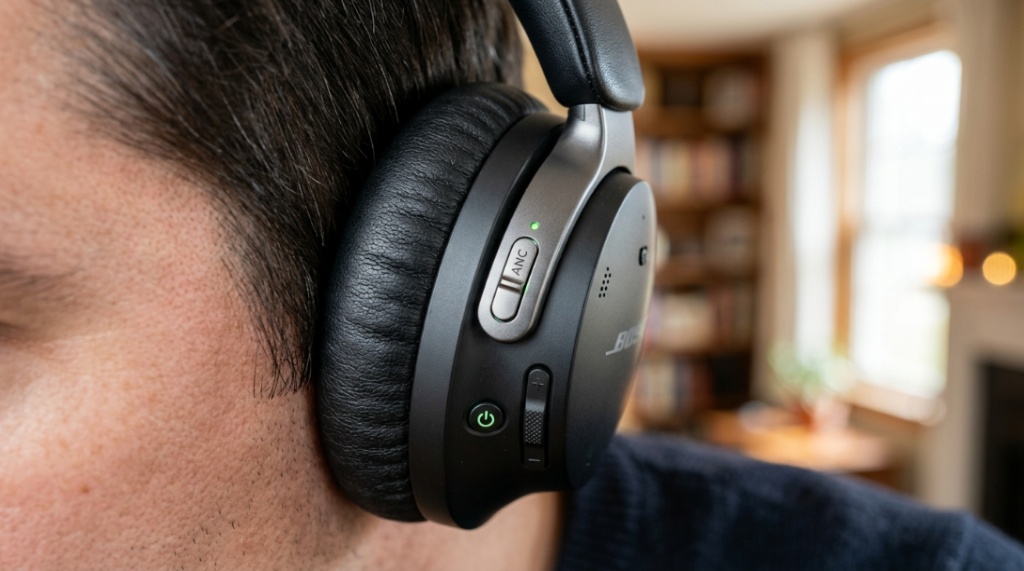
Yes — commuters benefit most from premium Bluetooth headphones because they encounter the highest variety of noise environments daily. Strong adaptive ANC, secure fit for movement, and quick-charge backup transform stressful commutes into productive or relaxing time.
Commuter-specific benefits of premium headphones:
- Adaptive ANC: Automatically strengthens cancellation when train noise increases, reduces it during quiet platform waits
- Wind noise reduction: Premium models use mesh-covered microphones that prevent wind distortion during outdoor walking segments
- Quick charge: Forgot to charge? A 5–15 minute top-up while getting ready provides 2–3 hours of playback — enough for a round-trip commute
- Durability: Premium materials withstand daily folding, bag storage, and temperature changes across seasons
For commuters dealing with multiple noise types (street traffic, train stations, bus engines, crowded carriages), premium ANC delivers the most dramatic quality-of-life improvement over budget options.
How Do You Decide Between Over-Ear and On-Ear for Daily Use?
Over-ear headphones provide better noise isolation and comfort for sessions longer than 2 hours. On-ear headphones are lighter and more portable but create pressure directly on ears that becomes uncomfortable during extended daily wear for most users.
Decision framework:
- Choose over-ear if: You wear them 3+ hours continuously, prioritize ANC performance, work in noisy environments, or have sensitive ears that dislike direct pressure.
- Choose on-ear if: Portability is your top priority, sessions are under 2 hours, you prefer lighter weight above all else, or you need more ambient awareness while wearing them.
For daily all-purpose use, over-ear dominates the premium segment because the comfort and ANC advantages compound over hours. The Bose QuietComfort line and Sony WH-1000XM series are both over-ear designs — this isn’t coincidental.
When tracking down the perfect pair of premium bluetooth headphones for daily use, long-term comfort is just as critical as audio fidelity. If your routine includes winding down with audiobooks or ambient tracks in bed, standard over-ear models can feel too bulky against a pillow. In those cases, you might want to look into specialized alternatives like Sleep Headphones That Stay Comfortable Until Morning, which offer a low-profile fit designed specifically to prevent ear fatigue while you rest. For daytime productivity, however, stick to high-end ergonomic headbands and memory foam earcups.
Conclusion
Premium Bluetooth headphones justify their price when worn daily — the comfort engineering, adaptive ANC, extended battery life, and multipoint connectivity solve real problems that budget headphones can’t address. Focus your purchase decision on three daily-use specifics: comfort beyond 4 hours, battery that survives a full day plus commute, and ANC that adapts as you move between environments. Everything else is secondary.
Need a specific recommendation? The Bose QuietComfort lineup consistently ranks highest for daily comfort and reliable noise cancellation across varied environments.
What’s your daily headphone routine look like? Share how many hours you wear yours and what matters most — sound, comfort, or silence. Your experience helps others make better decisions.
Frequently Asked Questions
How many hours per day is it safe to wear Bluetooth headphones?
There’s no strict medical limit for wearing headphones, but audiologists recommend keeping listening volume below 60% and taking 10-minute breaks every 2 hours to prevent listener fatigue. The physical safety concern is ear pressure and hygiene — clean ear cushions weekly if wearing 4+ hours daily.
Do premium Bluetooth headphones sound better than wired headphones?
With LDAC or aptX Adaptive codecs, premium Bluetooth headphones approach wired quality for 95% of listeners. Audiophiles using DACs and lossless files may prefer wired, but for daily streaming from Spotify, Apple Music, or YouTube, the difference is negligible with modern premium wireless headphones.
How often should I replace premium Bluetooth headphones?
Premium Bluetooth headphones last 3–5 years with proper care. Replace ear cushions every 18–24 months ($30–$40) to maintain comfort and isolation. The headphones themselves only need replacement when battery capacity drops below usable levels (typically after 3–4 years of daily charging).
Can I use premium Bluetooth headphones for gaming?
For casual gaming, yes. Premium Bluetooth headphones with aptX Low Latency or Bluetooth LE Audio provide acceptable lag (40–60ms). For competitive gaming where millisecond timing matters, wired headsets still offer the lowest latency. Most premium wireless headphones include an optional wired connection for zero-latency use.
What’s the difference between Bose QuietComfort and Bose QuietComfort Ultra?
The Ultra adds Bose Immersive Audio (spatial sound with head tracking), slightly improved ANC processing, and aptX Adaptive codec support. The standard QuietComfort offers the same core ANC engine, similar comfort, and 90% of the Ultra experience at $80–$100 less. For most daily users, the non-Ultra model provides better value.
Are premium headphones better than earbuds for daily use?
For extended wear (3+ hours), yes. Over-ear headphones distribute weight across the headband rather than putting pressure inside ear canals. They also provide larger drivers for better sound, stronger ANC, and longer battery life. Earbuds win on portability and exercise compatibility only.
Do premium Bluetooth headphones work well in hot weather?
Over-ear headphones trap heat regardless of price. Premium models with mesh-fabric ear cushions (like Bose’s optional breathable pads) manage heat better than solid leather alternatives. In very hot climates, consider models with removable, washable cushion covers or switch to on-ear/earbuds during peak summer months.