The Best 15 Trending SaaS Tools Shaping Business in 2025
The world of Software-as-a-Service (SaaS) is a relentless whirlwind of innovation. What was cutting-edge yesterday might be standard today, and what’s emerging now could redefine how we work tomorrow. As we navigate 2025, businesses constantly seek tools that enhance productivity, streamline workflows, foster collaboration, and leverage the power of artificial intelligence (AI). Staying competitive means adopting solutions that aren’t just functional but actively trending – the platforms gaining significant traction, introducing game-changing features, and setting new benchmarks.
SaaS has fundamentally changed how businesses operate, offering scalability, accessibility, and cost-effectiveness compared to traditional software models. From managing customer relationships and projects to automating complex tasks and generating creative content, there’s a SaaS solution for nearly every business need. But with thousands of options available, identifying the best and most relevant tools for 2025 can be overwhelming.
This article cuts through the noise to spotlight 15 SaaS tools making significant waves this year. These platforms stand out due to their innovative features (often heavily infused with AI), growing user bases, impact on specific industries, and ability to solve modern business challenges. Whether you’re a startup founder, a team lead, or an enterprise decision-maker, understanding these trending tools can help you optimize your tech stack and drive growth.
-
ChatGPT (OpenAI)
It’s impossible to discuss trending software in 2025 without mentioning the generative AI behemoth, ChatGPT. While it burst onto the scene earlier, its continuous evolution (powered by models like GPT-4 and beyond) and deepening integration into countless business workflows keep it firmly at the forefront. ChatGPT excels at natural language understanding and generation, making it invaluable for content creation, brainstorming, coding assistance, customer support automation, data analysis, and much more. Its API allows developers to embed its capabilities into other SaaS products, fuelling innovation across the tech landscape. As AI becomes less of a novelty and more of a core business function, ChatGPT remains a pivotal tool for individuals and organizations seeking to leverage large language models.
-
HubSpot
HubSpot has long been a dominant force in the CRM and marketing automation space, but its continued relevance in 2025 stems from its relentless innovation, particularly its deep integration of AI across its platform (HubSpot AI). It offers a comprehensive suite encompassing Marketing Hub, Sales Hub, Service Hub, CMS Hub, and Operations Hub, providing a unified view of the customer journey. Trending features include AI-powered content generation, predictive lead scoring, AI assistants for sales and service reps, and enhanced analytics. HubSpot’s ability to serve businesses from startups to enterprises, combined with its focus on creating a seamless, AI-enhanced customer experience, keeps it a top trending choice for companies aiming to consolidate their GTM (Go-to-Market) tech stack.
-
Monday.com
Positioning itself as a “Work OS,” Monday.com transcends traditional project management. Its visual, flexible, and highly customizable platform allows teams to build workflows for virtually any process, from project tracking and task management to CRM, marketing campaign management, and software development lifecycles. What keeps Monday.com trending in 2025 is its adaptability, extensive integrations, and the continuous addition of features like enhanced dashboards, automations, and templates catering to diverse industries. It empowers teams to break down silos and collaborate effectively in a centralized workspace, making it popular for organizations seeking a single platform to manage multifaceted operations visually and efficiently.
-
Slack
Despite the rise of numerous communication platforms, Slack remains a cornerstone of workplace collaboration in 2025. Its persistence as a trending tool is due to its robust feature set, extensive integrations with other business applications, and continuous improvements focused on enhancing productivity and reducing noise (like Slack Canvas for persistent information and Huddles for quick audio/video chats). Slack serves as a central hub for team communication, file sharing, and workflow automation through its vast app directory. In hybrid and remote work environments, its ability to facilitate seamless asynchronous and synchronous communication keeps it indispensable for countless organizations globally.
-
Figma
Figma has revolutionized the design world and continues its reign in 2025 as the leading platform for collaborative interface design and prototyping. Its browser-based nature allows multiple users – designers, developers, product managers, marketers – to collaborate in real-time on the same file. Features like FigJam (its online whiteboarding tool), extensive plugin ecosystem, design systems support, and developer handoff tools make it incredibly powerful. Figma’s trend status is cemented by its deep adoption within the tech industry and its role in streamlining the entire product development lifecycle, fostering better alignment between design and engineering teams.
-
Notion
Notion has carved out a unique niche as an all-in-one workspace for notes, documents, project management, and knowledge bases. Its incredible flexibility, allowing users to create interconnected pages, databases, and wikis using simple building blocks, is its core strength. In 2025, Notion is trending more than ever thanks to the powerful integration of Notion AI, which assists with writing, summarizing, brainstorming, and data organization directly within the platform. This blend of flexible organization and embedded AI makes it a favorite for personal productivity, team collaboration, and company-wide knowledge management, challenging traditional office suites and project tools.
-
Canva
Canva has democratized design, evolving far beyond simple social media graphics. In 2025, it’s a comprehensive visual communication platform used by individuals, teams, and large organizations. Its continued trendiness is driven by its user-friendly drag-and-drop interface, vast library of templates and assets, and, crucially, the integration of its “Magic Studio” AI features. These AI tools assist with image generation, background removal, text generation (Magic Write), presentation creation, and even video editing. Canva empowers non-designers to create professional-looking content quickly and collaboratively, making it an essential tool for marketing, sales, HR, and internal communications.
-
Zapier
In an increasingly interconnected digital world, the ability to make different apps talk to each other is paramount. Zapier remains the undisputed leader in workflow automation for non-developers in 2025. It connects thousands of web applications, allowing users to create automated workflows (“Zaps”) based on triggers and actions, without writing any code. Its relevance continues to trend upwards as businesses rely on more specialized SaaS tools; Zapier acts as the crucial glue holding these disparate systems together. By automating repetitive tasks between apps (like adding new leads from Facebook Ads to a CRM or getting Slack notifications for new sales), Zapier saves significant time and reduces manual errors.
-
GitHub Copilot
For the software development world, GitHub Copilot has been transformative and remains a hot topic in 2025. This AI-powered pair programmer, deeply integrated into code editors like VS Code, suggests code snippets and entire functions in real-time as developers type. Trained on a massive dataset of public code, it significantly speeds up development, helps overcome coding blocks, and assists in learning new languages or frameworks. While AI code generation raises ongoing discussions about code quality and security, its undeniable productivity boost makes Copilot (and similar AI coding assistants) a trending and increasingly standard tool in modern software engineering workflows.
-
Miro
Miro is the go-to online collaborative whiteboard platform, essential for brainstorming, workshops, planning, diagramming, and visual project management in 2025. Especially vital for distributed and hybrid teams, Miro provides an infinite canvas where users can collaborate in real-time using sticky notes, shapes, templates, drawing tools, and integrations with other platforms like Jira, Asana, and Slack. Its versatility for everything from Agile ceremonies (like retrospectives) to complex system design and strategic planning keeps it trending as a fundamental tool for visual collaboration and ideation across various departments.
Related: Generative AI and the Role of Marketing Trends You Should Know
-
Airtable
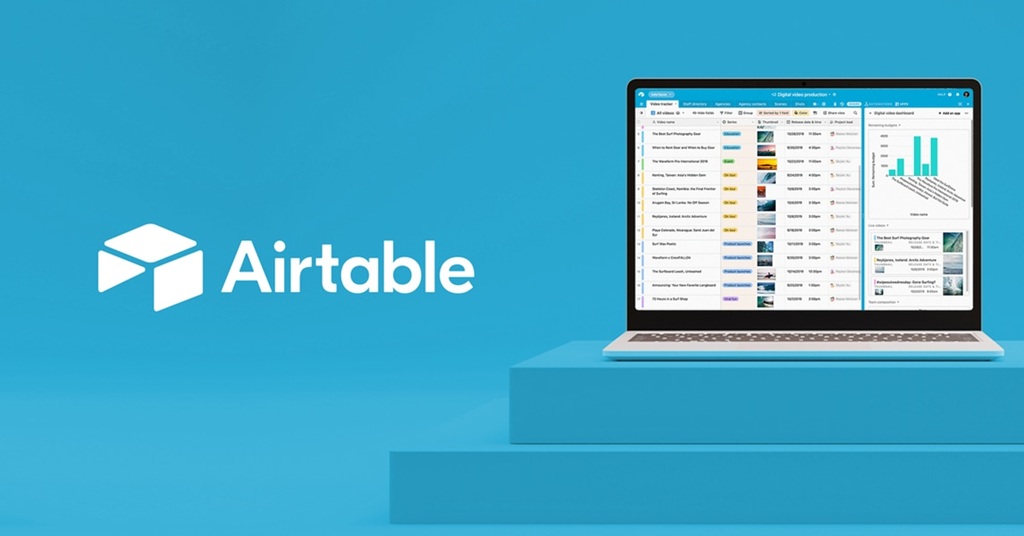
Airtable blurs the lines between a spreadsheet and a database, offering a powerful yet user-friendly platform for building custom applications and workflows without extensive coding. Its flexibility allows users to organize information, manage projects, track inventory, plan events, and much more. Airtable’s trendiness in 2025 is fuelled by the growing low-code/no-code movement, empowering “citizen developers” within organizations. Features like customizable views (Grid, Calendar, Kanban, Gantt, Gallery), powerful filtering and sorting, automation capabilities, and interface designer make it a versatile tool for teams looking to create tailored solutions for their specific data management and operational needs.
-
ClickUp
ClickUp positions itself as the “one app to replace them all,” aiming to consolidate tasks, documents, chat, goals, and whiteboards into a single platform. Its key differentiator and reason for trending in 2025 is its extreme customizability. Users can tailor virtually every aspect of the workspace, from custom fields and statuses to multiple project views (List, Board, Calendar, Gantt, Table, Mind Map, etc.). ClickUp appeals to teams overwhelmed by juggling too many tools, offering a powerful, albeit potentially complex, solution for centralizing work and improving productivity through customization and a rapidly expanding feature set, including AI tools.
-
Stripe
While often working behind the scenes, Stripe is a foundational SaaS platform powering online commerce and remains critically important in 2025. It provides a suite of APIs and tools that allow businesses of all sizes to accept payments, manage subscriptions, prevent fraud, issue corporate cards, manage revenue, and handle complex financial operations globally. Stripe’s trendiness is driven by its developer-first approach, continuous expansion into new financial services (like Treasury and Capital), and its role in enabling the growth of the internet economy, from small startups to large enterprises. It simplifies the complexities of online payments and financial infrastructure.
-
Jasper (formerly Jarvis)
As content demands continue to soar, AI writing assistants have become indispensable. Jasper is a leading platform in this space, specifically tailored for marketing and business content creation, making it a trending tool in 2025. It leverages AI to help users generate blog posts, marketing copy, social media updates, email campaigns, website content, and more, often with specific frameworks and templates optimized for conversions. Jasper focuses on producing high-quality, brand-aligned content efficiently, integrating with workflows and aiming to act as an AI “copilot” for marketing teams, helping them scale content production while maintaining quality.
-
Intercom
Customer support expectations are higher than ever, demanding personalized, instant, and efficient interactions. Intercom is a leading customer communications platform that remains highly relevant in 2025 due to its focus on AI-powered support and engagement. It combines live chat, automated chatbots (like its AI bot, Fin), help centers, product tours, and targeted messaging in one platform. Intercom helps businesses provide proactive support, onboard new users, announce features, and engage customers contextually across their journey. Its advanced AI capabilities for automating responses, routing conversations, and summarizing interactions make it a trending choice for companies looking to scale support and improve customer satisfaction efficiently.
Related: How to Measure and Improve Your Digital Marketing ROI
People Also Ask (FAQs)
Q1: What is the biggest trend in SaaS for 2025?
A1: Artificial Intelligence (AI) integration is undoubtedly the most significant trend shaping the SaaS landscape in 2025. From generative AI for content creation (ChatGPT, Jasper) and coding (GitHub Copilot) to AI-powered analytics and personalization in CRM (HubSpot) and customer support (Intercom), AI features are becoming standard expectations, driving productivity and enabling new capabilities across almost every SaaS category.
Q2: How do I choose the right SaaS tools for my business in 2025?
A2: Choosing the right SaaS tools involves several steps: 1. Identify Needs: Clearly define the problems you need to solve or the processes you want to improve. 2. Research Options: Look for tools specifically designed for your needs, considering trending platforms known for innovation. Read reviews and compare features. 3. Consider Integration: Ensure the tool integrates well with your existing tech stack (e.g., via Zapier or native integrations). 4. Evaluate Scalability & Security: Choose tools that can grow with your business and meet robust security standards. 5. Assess Usability & Support: Opt for tools with intuitive interfaces and good customer support/training resources. 6. Utilize Free Trials: Test shortlisted tools before committing to a subscription.
Q3: Are free SaaS tools effective for businesses?
A3: Yes, many SaaS tools offer generous free plans that can be very effective, especially for small businesses, freelancers, or specific use cases (e.g., Trello for basic project management, Slack for team communication, Canva for occasional design needs). However, free plans often have limitations on features, users, storage, or usage. As your needs grow, you’ll likely need to upgrade to paid plans for advanced functionality, scalability, and support.
Q4: What is Vertical SaaS and why is it trending?
A4: Vertical SaaS refers to software solutions designed for a specific industry or niche (e.g., software for dental practices, construction management, or restaurant operations). It’s trending because these tools offer highly specialized features, workflows, and compliance capabilities tailored to the unique needs of that industry, providing deeper value than general-purpose horizontal SaaS platforms. Businesses often find vertical SaaS better fits their specific operational requirements.
Conclusion
The SaaS landscape in 2025 is dynamic, exciting, and increasingly intelligent. The tools highlighted here represent just a fraction of the innovation happening, but they exemplify key trends: the pervasive integration of AI, the demand for seamless collaboration, the power of automation, the rise of low-code/no-code solutions, and the need for specialized platforms.
Leveraging the right SaaS tools is no longer just about efficiency; it’s a strategic imperative for growth, innovation, and maintaining a competitive edge. By staying informed about trending solutions and thoughtfully evaluating how they can address specific business challenges, organizations can build a powerful, adaptable, and future-ready technology stack to thrive in the years ahead. The key is not just adopting technology, but adopting the right technology that empowers your teams and delights your customers.