Canon AE-1 Battery Life: How Long Does the Battery Really Last?
Canon AE-1 battery life can easily cover months of shooting and often close to a year on a fresh 6V cell when the camera is healthy and used correctly. To get reliable results from your vintage Canon, you need to understand what kind of battery it uses, what really drains it, and how to avoid the common problems that make people think the AE-1 “kills batteries.”
What Powers the Canon AE-1?
The Canon AE-1 is an electronically controlled 35mm SLR, which means it will not function at all without a battery. The battery runs the light meter, the shutter, and other internal electronics, so battery condition directly determines whether the camera can shoot.
-
Battery type: One 6V cell, commonly labeled 4LR44 (alkaline) or 4SR44 (silver oxide). These are also sold under names like PX28, PX28A, PX28-S, or 4G13 depending on brand and chemistry.
-
Official spec: Canon documentation states that the battery lasts “about one year” under normal use.
Because the AE-1 is relatively efficient and only draws significant power when metering or firing, real-world users often get many months of use out of a single quality battery.
Canon AE-1 Battery Life: How Long Does It Really Last?
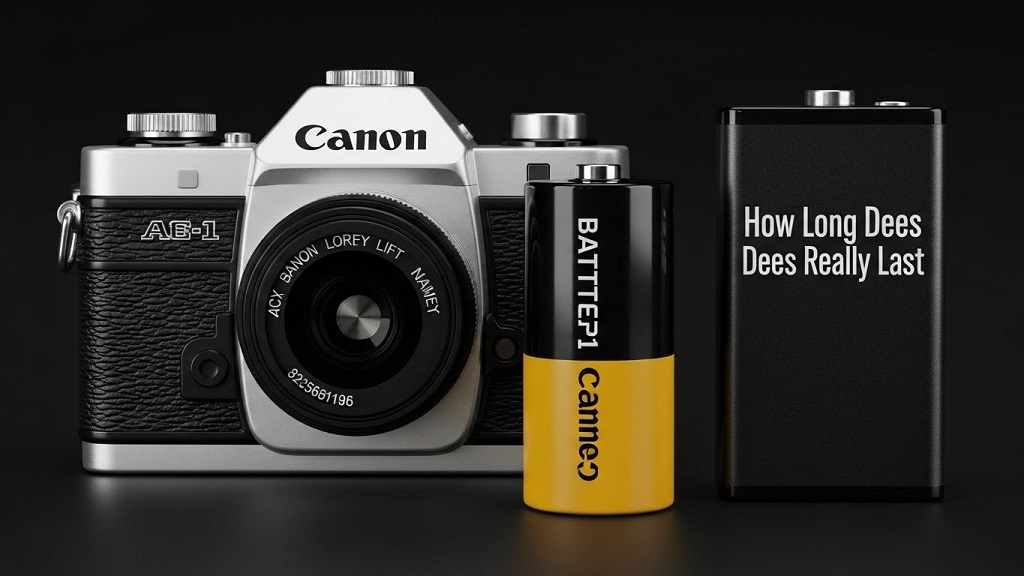
When photographers ask “how long does a Canon AE-1 battery last,” they want a realistic expectation for travel, daily carry, or occasional shooting. In practice, canon ae-1 battery life falls into a fairly consistent range if the camera is working correctly.
Typical real-world lifespan:
-
Normal hobby use (a few rolls a month, proper storage): around 6–12 months on a fresh silver-oxide or good alkaline cell.
-
Light, occasional use (camera mostly stored, brought out for trips): often close to a year, sometimes longer, as long as the camera is locked and the meter is not accidentally left active.
Several film shooters report batteries lasting “many months” or even a couple of years when the camera sits in storage, locked and with no electrical faults. That matches Canon’s “about one year” guideline for canon ae-1 battery duration under normal use.
What Actually Uses the Battery?
Understanding ae-1 battery usage inside the camera helps explain why some people get long life and others burn through cells quickly.
The battery is used when:
-
You half-press the shutter button and activate the light meter.
-
You fire the shutter and advance film.
-
You press the battery check button or use the self‑timer / AE features.
The AE-1 does not have a traditional on/off switch, but the film advance lever and lock positions control whether the shutter and meter can be activated. If the lever is out and the camera is not locked, the meter can be woken easily by pressure on the shutter button in a bag, slowly draining power over time.
Battery Types and Their Effect on Duration
The camera was designed for a 6V cell, but modern chemistries slightly change how that power is delivered and how your canon ae-1 battery life feels in practice.
Alkaline (4LR44 / PX28A)
-
Widely available and cheap.
-
Voltage starts at 6V but drops steadily as the battery is used, so the “good” window can be shorter.
-
Fine for casual shooting, but you may see shorter canon ae-1 battery duration compared with silver oxide.
Silver oxide (4SR44 / PX28-S)
-
Holds a more stable voltage over most of its life, then drops sharply at the end.
-
Often recommended as the best option for consistent metering and longer usable life.
-
Usually costs a bit more, but many film photographers consider it worth it for dependable ae-1 battery usage.
Other 6V options
Some manufacturers offer lithium PX28L-type batteries that can work in the AE-1 and have excellent shelf life, though they may be less common in local shops. Always check that the battery provides 6V and fits the chamber correctly.
Signs Your Battery Is Getting Weak
Because the AE-1 depends entirely on its battery, spotting low power early prevents lost shots. Canon built a simple battery check into the camera.
Common low-battery signs:
-
The battery check test no longer gives the expected needle or beep behavior described in the manual, or it slows noticeably.
-
The meter needle behaves erratically or stays in an odd position even when lighting does not change.
-
The shutter refuses to fire or only works intermittently, especially at certain speeds.
If Canon’s own guidance says the battery test indicates “low,” replace it; batteries are cheap compared with a ruined roll of film.
Why Is My Canon AE-1 Draining Batteries So Fast?
If your battery dies in days or after only a few rolls, that is not normal canon ae-1 battery life. It usually indicates a usage habit or an underlying camera issue.
Frequent causes:
-
Meter left active in a bag: The film advance lever is pulled out, the camera is not locked, and something presses the shutter button halfway in your bag, keeping the meter on.
-
Stuck switch or electronic fault: Older bodies can develop sticky shutter buttons, worn contacts, or issues in the timing circuit that leave the camera drawing current even when it looks idle.
-
Corroded contacts or wiring: Past battery leakage can leave residue that creates partial shorts or poor connections, which both increase drain and make the camera unreliable.
Repair forums and technicians often report that AE-1 bodies that “eat batteries” calm down after cleaning corrosion, adjusting switches, or servicing the shutter magnets. If a fresh, high‑quality 4SR44 still dies quickly with careful use, a professional checkup is usually the right move.
How to Maximize Canon AE-1 Battery Life
Good habits can stretch canon ae-1 battery life to the upper end of its potential and keep your camera ready when you need it.
Practical tips:
-
Lock the camera when not shooting: Use the lever and lock position so the shutter button cannot be half‑pressed in your bag, which prevents the meter circuit from staying on.
-
Store with care: Avoid leaving the camera powered and uncovered in bright light for long periods, which encourages more frequent metering; a lens cap and a padded bag help.
-
Remove battery for long-term storage: If you will not shoot for a month or more, remove the battery to avoid slow drain and leakage risk.
Carrying a spare 4LR44 or 4SR44 is inexpensive insurance and strongly recommended for travel or important shoots, since many stores may not stock these batteries in every town.
Best Practices for AE-1 Battery Usage
Beyond storage and locking, a few habits improve ae-1 battery usage and keep your camera healthy.
-
Choose reputable brands: Good silver‑oxide or alkaline brands tend to leak less and provide more stable voltage, both important for an older electronic camera.
-
Inspect the battery compartment: Look for white or green buildup, rust, or cracks. Cleaning mild corrosion carefully (or having a technician do it) can prevent intermittent power and extra drain.
-
Replace on a schedule: For a regularly used camera, many photographers replace the battery once a year or just before a big trip and keep the old one as an emergency backup if it still tests well.
These small steps help you get the most from your canon ae-1 battery duration and avoid surprises when you are halfway through a special roll of film.
FAQ: Canon AE-1 Battery Life
How long does a Canon AE-1 battery last?
Under normal conditions, a Canon AE-1 battery lasts about a year according to Canon’s own specifications, assuming moderate shooting and proper storage. In real use, many photographers see comfortable performance for several months to a year on a good 4SR44 or 4LR44 cell.
What battery does the Canon AE-1 use?
The Canon AE-1 uses a single 6V battery: typically a 4LR44 (alkaline) or 4SR44 (silver oxide), sold under codes like PX28, PX28A, PX28-S, or 4G‑13 depending on manufacturer. Any modern equivalent that matches the 6V spec and physical size is usually suitable.
Why is my Canon AE-1 killing batteries so fast?
Fast drain usually indicates that the meter or shutter circuits stay active when they should be idle, or that there is corrosion or a fault inside the camera. A partially pressed shutter button in a bag, worn switches, or past battery leaks can all cause abnormal drain and shorten canon ae-1 battery life dramatically.
How can I extend canon ae-1 battery life?
You can extend canon ae-1 battery duration by locking the camera when not in use, avoiding resting gear against the shutter button in your bag, and removing the battery for long storage. Using a good silver‑oxide 4SR44 and checking the compartment for corrosion will also help your battery last longer and work more reliably.
Can the Canon AE-1 work without a battery?
No. The Canon AE-1 is fully dependent on its battery; the shutter and meter do not operate at all without a working 6V cell installed.
Final Thoughts and Call to Action
Canon AE-1 battery life does not have to be a mystery or a headache; with the right 6V cell, careful storage, and a few simple habits, you can expect months to a year of solid performance from each battery. Before your next shoot, check your current battery, inspect the compartment, drop a fresh 4SR44 or 4LR44 plus a spare into your bag, and build battery checks into your regular camera maintenance so your AE-1 is always ready when inspiration hits.
Related Topics: Cox Modem Orange Light Explained: Is Your Internet Down and How to Fix It?
Related Topics: Kitchen Makeover Ideas to Help you plan your Kitchen